

Spain’s Democratic Memory Law (Ley de Memoria Democrática) came into force in October 2022. The law, which is closely connected to Spain’s Historical Memory Law and faced strong opposition from Spain’s right, was part of an attempt to honor the victims of the Franco dictatorship and do away with what remained of the regime, nullifying unjust verdicts, exhuming mass graves, and providing citizenship restitution to descendants of exiles.
The law expired on October 22, 2025, and now, Spanish media outlets are examining the political battle surrounding the law, as well as how its end is affecting people with Spanish lineage globally, especially those with jus sanguinis or jus sanguinis–based claims.
What Media Outlets Are Saying: Mixed Views
Prominent Spanish newspapers had reported mixed progress in the implementation of the 2022 law. El País noted lags in the law’s educational mandates about the Spanish Civil War and dictatorship. But officials have noted important advancements, like a new human rights prosecutor network, designed to assist in grave exhumations and victims’ truth-recovery.
The Socialist-led government used the Democratic Memory Law to begin dissolving pro-Franco institutions, including legislation that led to banning the Franco Foundation’s praise of the coup and dictatorship, reinforcing the country’s break from the Franco regime.
However, right-leaning media have been critical when reporting on the law, enforcing a narrative that it was a partisan tool designed to support the left’s voter base.
ABC (a conservative daily) characterized the law’s mass granting of nationality to Franco-era descendants as the leftist government’s back-door ploy.
Last Minute Efforts and Historical Memory
BSS News reported that the Spanish government, led by Prime Minister Pedro Sánchez, moved to finish one of the law’s key mandates by November 2025 – purging Francoist symbols from public spaces. These efforts were not met without PP resistance.
Media continued to follow the dramatic changes at Franco’s former mausoleum. The Democratic Memory Law made it possible to rename the site (removing “Fallen” in favor of its location name), according to El País Spain.
A Latin American Response That Surpassed Expectations
Latin America’s deep connections to Spain’s history (as a refuge for Republican exiles and home to millions of their descendants), meant widespread coverage and a spike in citizenship by descent applications in certain countries.
According to Infobae, global media coverage showed that, by July 31, 2025, 876,321 people worldwide had submitted citizenship applications under Spain’s Democratic Memory Law. Roughly 414,000 of these were approved, and by that point, about 237,000 new Spaniards had already received their passports, often completing registration through the Civil Registry. Figures are expected to rise, as consulates continue to process remaining applications.
The law opened “a transatlantic corridor of identity,” as Mexican outlet Libre en el Sur put it, with entire families scouring parish archives for proof of a Spanish-born grandparent. Demand was particularly high in Latin America, home to many descendants of those who fled the Civil War (1936–39) or Franco’s repression. Argentina, Cuba, and Mexico emerged as the top three sources of applicants – a telling reflection of historical ties.
Surge in Argentine Applications
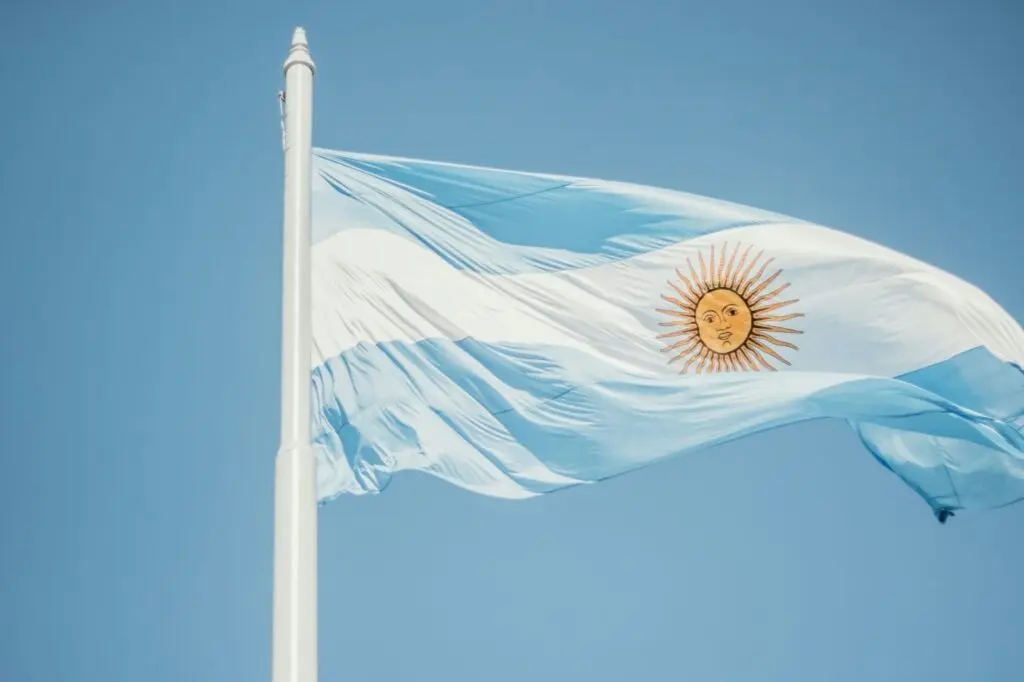
According to Infobae, Argentina notably hosts the largest Spanish community abroad (roughly 482,000 Spanish citizens in Argentina as of 2024), and Argentina led the world in applications.
By October 2025, around 366,000 applicationshad been filed in Argentina’s Spanish consulates (about 42% of the global total). More than 174,000 Argentines had already obtained Spanish nationality via this law, and hundreds of thousands more were in the queue.
Uruguay, Chile, and Venezuela
Uruguay saw a rise in applications; over 9,000 Uruguayan descendants filed for Spanish citizenship during the Democratic Memory Law window, according to El País Uruguay. The Spanish Embassy of Uruguay in Montevideo had to reinforce staffing and extend hours to handle the surge.
In Chile, where many Republican exiles settled after the Civil War, officials recorded 44,181 applications by mid-2025. This was expected to reach 60,000 after all appointments were booked. Over 36,000 of those Chilean cases had been approved by October, according to El País Chile, with demand so high that many new applicants have consular interview dates in 2026.
Venezuela also saw high interest, and Spanish diplomats noted logistical difficulties due to mobility and connectivity issues.
Mexico
Mexico is home to a sizable community of Spanish descendants. Outlets like Libre en el Sur highlighted the emotional resonance of the law’s end. Thousands of citizens with Spanish roots queued at the Spanish Embassy in Mexico City and consulates in Guadalajara and Monterrey.
The revelation that Beatriz Gutiérrez Müller, the wife of Mexico’s former Andrés Manuel López Obrador, was herself among the applicants for Spanish nationality was notable. Just a few years prior, she had publicly urged Spain to apologize for colonial-era abuses. Her case highlighted the broad eligibility criteria, which enabled many with more distant Spanish roots to reclaim nationality.
Spike in Cuban Applications
For Cubans, the Democratic Memory Law is also known as the Grandchildren’s Law or “Ley de Nietos.” In Cuba, the law promised passports to many, representing an escape from hardship amidst Cuba’s financial crisis. Cubanet coverage reported that more than 107,000 people in Cuba began the Spanish citizenship process during the law’s three-year run.
One of Spain’s busiest consulates, located in Havana, was overwhelmed, facing long lines, technical difficulties, and a black market for coveted time slots.
Applicants hurried to secure timestamped application receipts to prove that they’d met the deadline. Those who obtained the receipt can continue their cases in coming months, even if their in-person interview is scheduled after the cutoff.
Affect on Cuba’s Legislative Discourse
Cubanet reported that the end of the Democratic Memory Law was linked to ongoing legislative discussions in Spain. A proposal backed by the General Council of Spanish Citizenship Abroad is on the table, outlining principles for a permanent descent-based nationality process. This would theoretically change five aspects:
- Remove generational limits
- End gender discrimination
- Provide automatic transmission of nationality
- Simplify consular procedures
- Lengthen the benefit window
By late October 2025, the initiative had been presented in parliamentary commissions, though its fate will depend on political will in the new legislature. Discussions also touched on reforms to the Civil Code, the Amnesty Law, and other legislation affecting nationality.
United States: Reactions to Democratic Memory Law’s Expiration
In the United States, the repeal was noted internationally by outlets serving Spanish-speaking audiences.
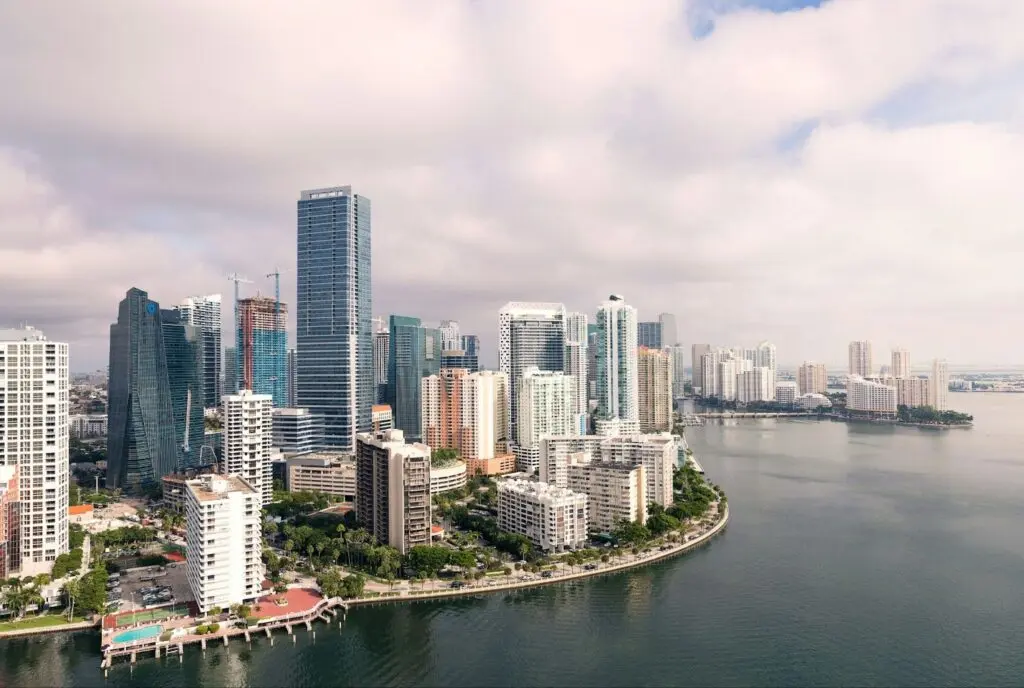
Importantly, Spanish diaspora communities in the U.S. kept a close eye on the nationality provisions. Spanish consulates in cities like New York and Miami saw steady streams of inquiries from Americans (often of Latin American origin) looking to apply via Spanish-born grandparents. Since consulates will continue to process applications for those who filed appointments in time, media outlets like El Nuevo Herald in Miami covered the application process.
The story particularly resonated with Cuban-American families, including those with Spanish grandparents who emigrated to Cuba pre-1959. Hence, U.S. coverage in South Florida framed the law’s end in the context of current Cuban emigration waves (a Spanish passport being one ticket out of Cuba’s crisis).
European and Australian Responses
Coverage in other regions, such as Europe, has generally been filtered through international wire services and specialist outlets. In the UK, The Guardian extensively covered the Democratic Memory Law’s approval in 2022, detailing Franco’s atrocities and Spain’s longstanding silence. In March 2025, The Guardian observed that the Socialist government implementing last measures (like relocating victims’ graves).
In Australia, the story received only modest coverage. Previously, the English-language ABC (Australian Broadcasting Corp) covered Spain’s exhumation of Franco in 2019.
Public and Political Commentary in Spain
Public reactions to the law’s repeal in Spain have been passionate on both sides. According to Publico, organizations like the Association for the Recovery of Historical Memory (ARMH) have been consistently supportive of the Democratic Memory Law.
An ARMH press release countered the right-wing narrative, saying, “it is worth remembering that next October 30th will mark 50 years since Juan Carlos de Borbón assumed the head of state position,” and noted the injustices done to Republicans in the regime.
Publico reported in late October 2025 that Spain’s Congress organized a solemn tribute to the last five victims executed under Franco in 1975, underscoring the ongoing pain and the importance of remembrance.
At reburials of exhumed victims, such as a 2024 ceremony in Mesía, participants implicitly championed the Memory Law’s goals. El Diario cited photos of these moving funerals amidst news of the law’s repeal. The result was an underlying message that the work of recovering truth and justice for victims is a democratic duty that may be abandoned without legal support.
Plataforma 2025 and Media Backlash Against It
Perhaps the most stark reaction was the formation of a group called “Plataforma 2025.” In March 2025, El País reported that the platform published a controversial manifesto entitled “Nosotros, españoles agradecidos con Francisco Franco” (“We, Spaniards grateful to Franco”).
Among the 1,200 signatories were well-known figures like retired generals, descendants of Franco, relatives of Francoist ministers, far-right activists, and even Antonio Tejero (a former Guardia Civil officer who led an attempted coup in 1981.
The manifesto explicitly praised Franco and strongly spoke against the Democratic Memory Law.
Its publication caused a media storm. El País and other outlets not only reported its contents, but published point-by-point rebuttals. This represented mainstream Spanish media essentially taking a stand that historical truth must prevail over revisionism, implicitly defending the Memory Law’s ethos amidst its legal expiry.
A Broader Historical and Ideological Impact
Analysts and opinion leaders have taken a deep dive into what the end of the Democratic Memory Law means for Spain’s democracy and its collective memory. A consensus in centrist and left-leaning op-eds is that the law’s repeal would be a huge regression in Spain’s ability to reckon with its past, something Spanish courts, including the Supreme Court, have also referenced in related rulings.
Spain is a signatory to human rights treaties that obligate it to investigate crimes against humanity (like the Rome Statute of the International Criminal Court (ICC)). The Memory Law was a small step toward fulfilling that obligation, and by scrapping it, Spain could once again be cited by the UN or European bodies for failing to pursue truth and justice.
Conversations Around Impact on Spanish Identity
With 2025 marking 50 years since Franco’s death, Spain is at a generational turning point. Those who remember the dictatorship are dwindling, and younger Spaniards did not live that history.
The discourse around the end of the Democratic Memory Law has the public and media outlets speculating on how future generations will understand Spanish identity and Spain’s connection to its dictatorial past.
Democratic Quality in Question
Spain’s Memory Law was viewed by many political scientists as part of a broader democratic progress. It aligned Spain with countries like Germany, for example, which has explicit remembrance policies for Nazi victims, or Italy with its condemnation of Fascism.
The law’s end detracts from that democratic progress and attempt at restitution for Franco’s victims.
Reflecting on the Law’s End
A larger-than-expected number of Spanish descendants abroad took advantage of Spain’s Democratic Memory Law before its October 2025 deadline, marking an important opportunity for many.
Examining the mixed media coverage surrounding the law suggests a deeper reflection on Spain’s dictatorial past and how a democracy should reckon with such a past. Wider public discourse right now suggests two strongly opinioned sides; those in the pro-memory camp believe Spain is backtracking, while conservatives maintain their stance against the law.
Without the law in place, descendants will have to take alternate pathways to Spanish citizenship. One thing is clear: Spain’s efforts toward historical justice are far from over.
Want to know if you are eligible for EU Dual Citizenship? Do our preliminary eligibility test to find out in 2 minutes!
2 Responses
I sincerely hope Spain eventually considers a permanent, inclusive pathway for descendants, because history shouldn’t be limited by deadlines…
Hi Davi,
Especially Law of Democratic Memory reaching its deadline application period in October 2025, it is important to stay up to date regarding the latest law changes to know if you are eligible to apply for Spanish citizenship through ancestry based on current regulations.
If you have a Spanish parent or grandparent, you may be eligible to apply at this time. If your ancestor is further removed, we recommend closely following our blog posts, as we will be close following any future developments if Spain were to open up new paths to citizenship through ancestry.
If interested in moving forward with an analysis of your eligibility, I highly recommend reviewing our service offerings here: https://citizenship.eu/how-it-works/