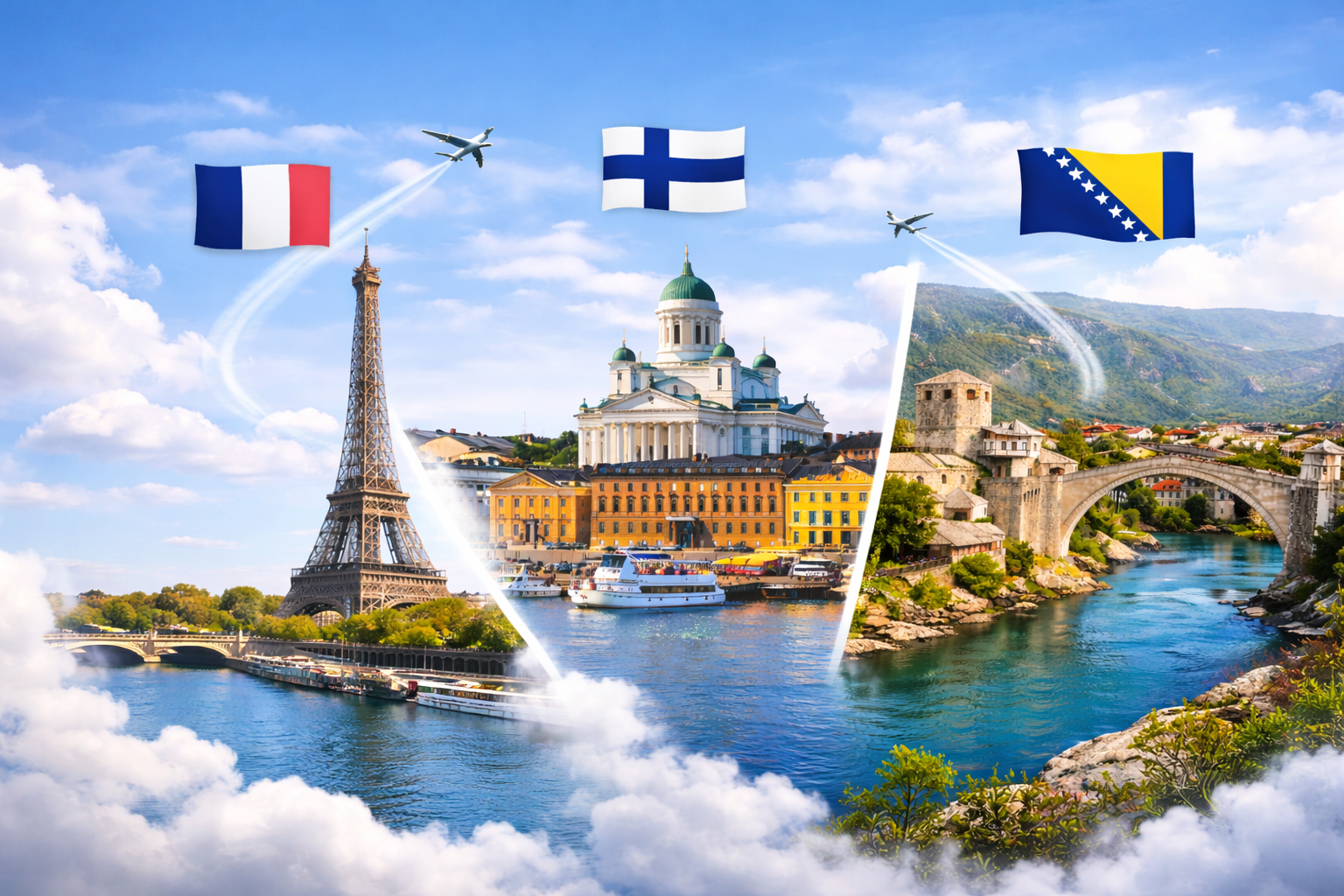
We promised more countries were on the way. Today, we’re delivering on that promise with three new additions to the Citizenship.EU platform, including our first country outside the European Union.
Starting today, Citizenship.EU users can run free eligibility assessments and order detailed ancestry citizenship eligibility reports for France, Finland, and Bosnia and Herzegovina. That brings our total coverage to 23 countries and counting.
Each of these countries has a distinct citizenship-by-descent framework, and each one fills a gap that our users have been asking about. Here’s what you need to know.
France

France has one of the more straightforward ancestry citizenship systems in Europe, at least in principle. French nationality law is built on jus sanguinis, or right of blood. If your parent was a French citizen at the time of your birth, you are legally considered French, regardless of where you were born. You don’t apply to become French. You apply to prove that you already are.
That distinction matters. French citizenship by descent is not a grant or a naturalization. It’s a recognition of an existing legal status. The process involves obtaining a Certificat de Nationalité Française (CNF) from the Tribunal de Paris, which serves as official proof of your French nationality.
Where it gets interesting for Americans with deeper roots is the generational chain. France technically allows citizenship to pass through multiple generations, as long as each generation in the chain retained French nationality. Your grandparent was French, but your parent never registered? That doesn’t necessarily disqualify you. If your parent was legally French by descent at the time of your birth (even if they never knew it or acted on it), the chain may still be intact.
The catch is what’s sometimes called the 50-year rule. If your family has lived outside of France for more than 50 years without any contact with French authorities (no passport renewals, no consular registrations, no official documents), citizenship may be considered lapsed. This is where things get fact-specific, and where a proper eligibility assessment makes all the difference.
There are no language requirements for French citizenship by descent, no residency requirements, and France fully allows dual citizenship. Processing typically takes 6 to 24 months once all documents are submitted.
Finland
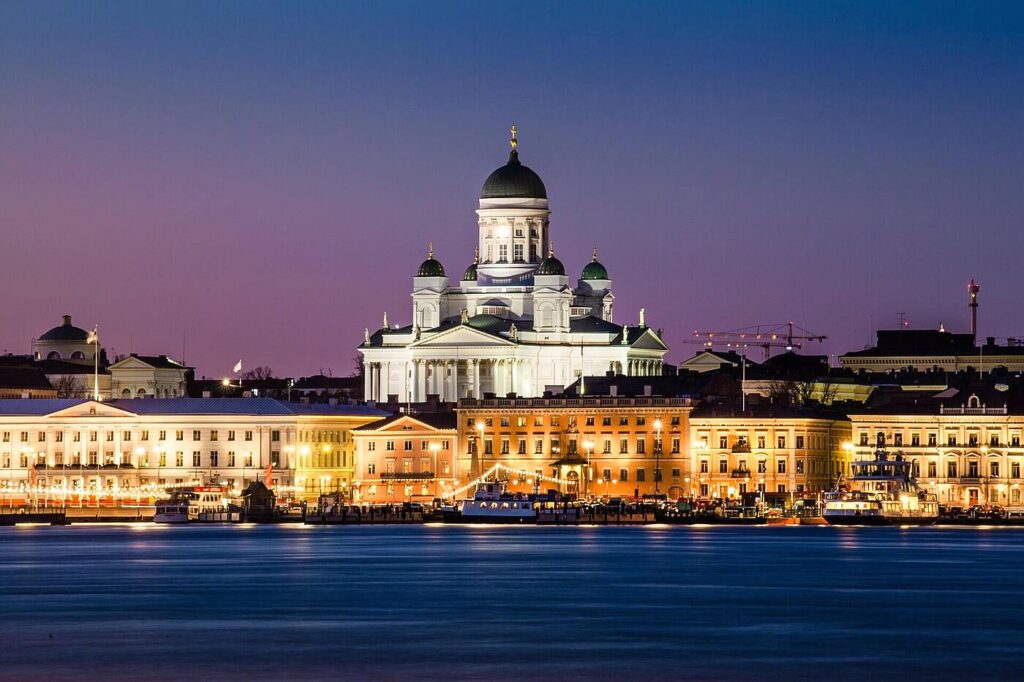
Finland’s citizenship-by-descent framework is particularly relevant for Americans with Nordic ancestry. Hundreds of thousands of Finns emigrated to the United States in the late 19th and early 20th centuries, settling heavily in the Upper Midwest (Michigan, Minnesota, Wisconsin) and parts of the Pacific Northwest. Many of their descendants are now rediscovering that Finnish citizenship may still be within reach.
Finnish nationality law allows citizenship to pass from parent to child, and in many cases, the chain can extend through grandparents and beyond. If your parent was a Finnish citizen at the time of their emigration (or never formally lost Finnish nationality), you may qualify to claim citizenship by declaration under Section 26 of the Finnish Nationality Act. For further generations, a detailed eligibility report would be necessary to see if citizenship recovery is possible.
Finland also offers a separate pathway for people of Finnish descent who don’t qualify for citizenship directly: a continuous residence permit under Section 47 of Finland’s Aliens Act. This permit is available to individuals who can demonstrate Finnish ancestry through a parent or grandparent, and it provides an unrestricted right to work in Finland without needing to meet financial support requirements.
Bosnia and Herzegovina: Our First Country Outside the EU
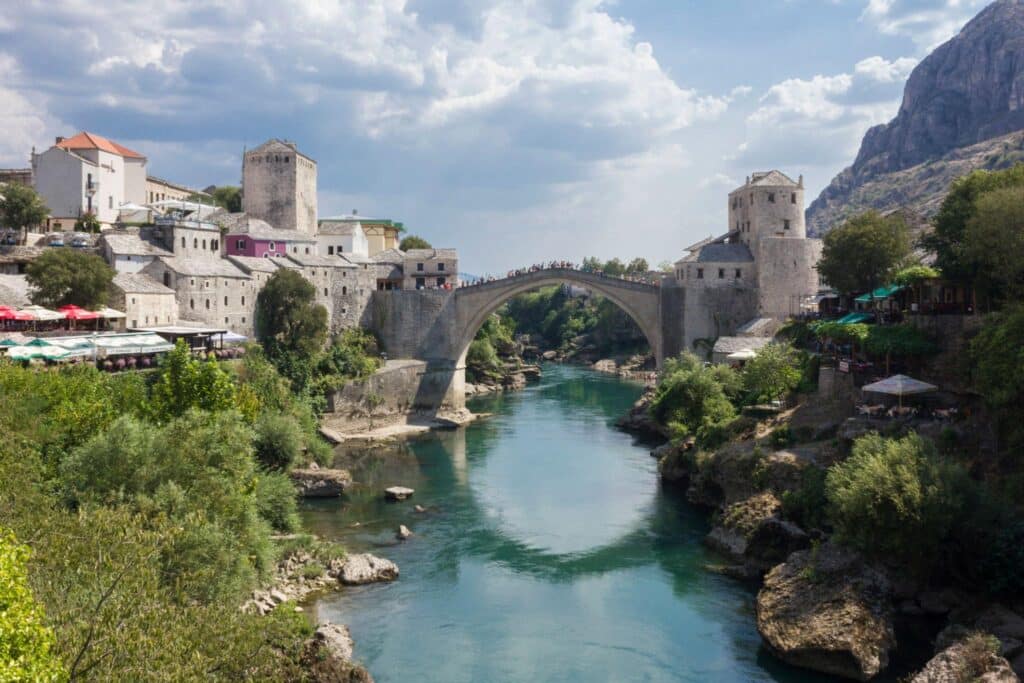
This one is a milestone for us. Bosnia and Herzegovina is the first country we’ve added to the Citizenship.EU platform that sits outside the European Union. While the name of our platform obviously centers on Europe, we’ve always planned to expand coverage to ancestry citizenship pathways beyond EU borders. Bosnia and Herzegovina is a natural starting point.
Bosnia and Herzegovina has a significant diaspora, particularly in the United States, Canada, Germany, Austria, Sweden, and Australia. Much of this emigration resulted from the 1992–1995 war, but Bosnian communities abroad go back well before that period. For the children and grandchildren of those who left, Bosnian citizenship by descent offers a way to maintain a legal connection to their family’s country of origin.
Under the Law on Citizenship of Bosnia and Herzegovina, a child born abroad to at least one parent who was a Bosnian citizen at the time of birth can acquire citizenship by descent. There is also a facilitated pathway for first- and second-generation descendants of emigrants who have returned to Bosnia and Herzegovina, which relaxes the normal residency and renunciation requirements that apply to standard naturalization.
Dual citizenship in Bosnia and Herzegovina is permitted in cases of citizenship acquired by descent, and also through bilateral agreements with countries including Croatia, Serbia, Sweden, and Turkey. The process can be handled through Bosnian diplomatic missions abroad, making it accessible to diaspora members who don’t currently reside in the country.
What This Means for You
All three countries are now fully integrated into the Citizenship.EU platform. That means you can run a free eligibility assessment for each one right now, just as you can for any of our other supported countries. If the results look promising and you want a more thorough analysis, our detailed ancestry citizenship eligibility reports are also available for France, Finland, and Bosnia and Herzegovina. These reports are reviewed by specialists who understand the specific legal requirements and documentary evidence needed for each country.
If you’ve been waiting to explore your French, Finnish, or Bosnian ancestry, now is the time. And if you’ve already run assessments for other countries on our platform, adding these three to your dashboard takes just a few minutes.
23 Countries and Growing
With France, Finland, and Bosnia and Herzegovina now live, Citizenship.EU supports eligibility assessments across 23 countries. We’re not stopping here. More countries are in the pipeline, and we’ll continue expanding coverage to meet the full range of ancestry citizenship pathways available to our users.
Start your free eligibility assessment today at Citizenship.EU and find out what your ancestry could unlock.